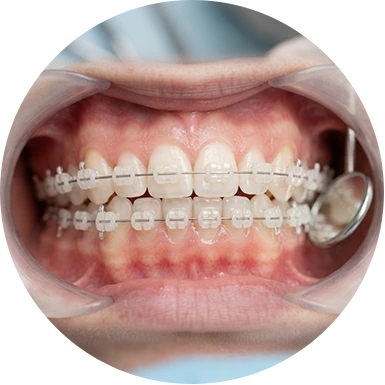
Oral health focus
Comprehensive dental care services in Montréal, Canada
Maintaining optimal oral health relies on a partnership between consistent daily care and professional expertise available throughout the Montréal area. Regular dental care helps preserve oral function, healthy teeth and gums, and smile aesthetics.

Proactive prevention
Preventing dental problems before they develop through routine monitoring and early intervention.

Targeted restoration
Repairing damaged teeth to restore comfortable chewing and full oral function.

Aesthetic enhancement
Refining your smile through cosmetic dental treatments designed to improve tooth appearance and self-confidence.
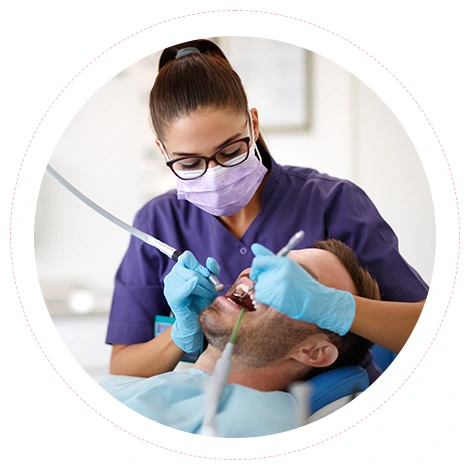
Core dental practice
The scope of general dentistry
A general practitioner serves as the primary point of contact for a patient’s entire oral health journey. This role encompasses dental examinations, diagnosis, treatment planning, preventive care, and coordinating with specialists when more advanced treatment is required.
This field is foundational, addressing everything from routine dental check-ups to more complex procedures. A practitioner manages initial diagnoses using tools like digital dental x-rays to assess the condition of teeth, gums, and jawbone. They are equipped to handle common problems such as toothaches, chipped teeth, and other dental emergencies, providing pain relief, stabilization, and appropriate follow-up care. This comprehensive approach supports continuity of dental care and a long-term understanding of each patient’s oral health needs within the local healthcare context.
Hygiene foundations
Preventive care and dental hygiene
A structured routine combining professional dental hygiene and daily oral hygiene forms a strong defense against dental disease. This preventive strategy focuses on controlling bacterial plaque to help keep teeth and gums healthy.

The professional cleaning process
Dental professionals use specialized instruments for dental scaling to remove hardened calculus, followed by polishing to reduce surface stains and leave tooth surfaces smoother.

Effective at-home regimens
Consistent daily brushing and flossing are critical for disrupting dental plaque formation between professional visits and cleaning areas that retain food debris and bacteria.

Strengthening enamel with fluoride
Topical fluoride applications help remineralize tooth surfaces and strengthen tooth enamel, making it more resistant to acid attacks associated with dental decay.
Restorative solutions
Addressing and treating cavities
When bacteria breach the enamel and cause tooth decay, timely treatment becomes necessary to halt its progression, remove damaged tissue, and restore the structural integrity of the affected tooth before deeper complications develop.
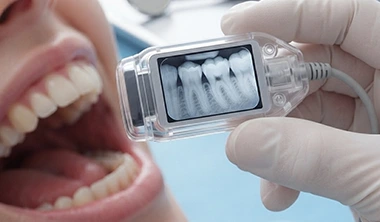
Early detection of decay
Visual examination and dental radiographs help dentists identify cavities, often before they cause noticeable symptoms such as tooth sensitivity or persistent discomfort.
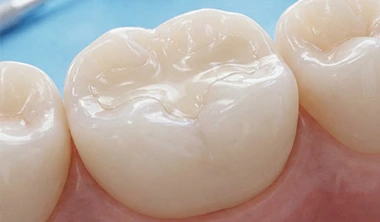
Modern composite resin fillings
This tooth-colored composite resin is bonded directly to the prepared cavity, creating a durable dental filling that restores tooth structure while maintaining a natural appearance.
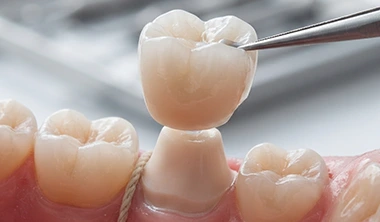
Protection with dental crowns
For extensive tooth damage, a dental crown is placed over the remaining tooth structure to restore its shape, size, strength, and chewing function.
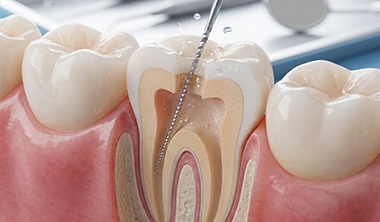
Saving the tooth’s core
Root canal therapy removes infected or inflamed dental pulp from inside a tooth, helping relieve pain, control infection, and preserve the natural tooth instead of extracting it.

Permanent replacement
The function of dental implants
For permanently replacing missing teeth, dental implants provide a stable, long-lasting alternative to some traditional dental prosthetics. The treatment involves an implant placed in the jawbone to create a secure foundation for the final restoration.
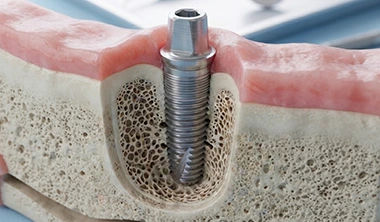
The osseointegration phenomenon
A titanium implant gradually integrates with the surrounding jawbone through osseointegration, creating a stable artificial root capable of supporting a dental restoration.
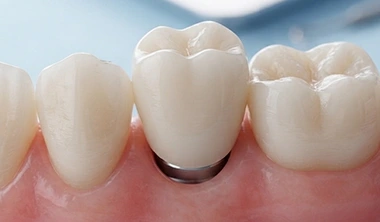
Restoring a single gap
One implant can support a single dental crown, replacing a lost tooth without requiring the adjacent teeth to support the restoration.
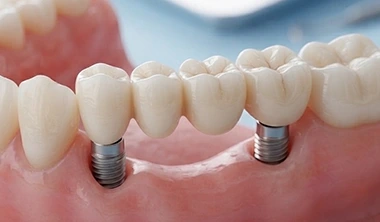
Bridging larger empty spaces
Two or more implants can anchor an implant-supported bridge, replacing several missing teeth in a row while providing stable support for chewing.
Bite correction
The field of modern orthodontics
This specialty focuses on diagnosing and correcting misaligned teeth and jaws. Proper dental alignment can improve smile aesthetics and oral function while making daily cleaning easier and helping reduce abnormal tooth wear.